
Recruitment
cycle
Does your organisation need to improve their recruitment processes and prevent non-compliance?
Helping to avoid employment civil penalties, tribunals and GDPR non-compliance.
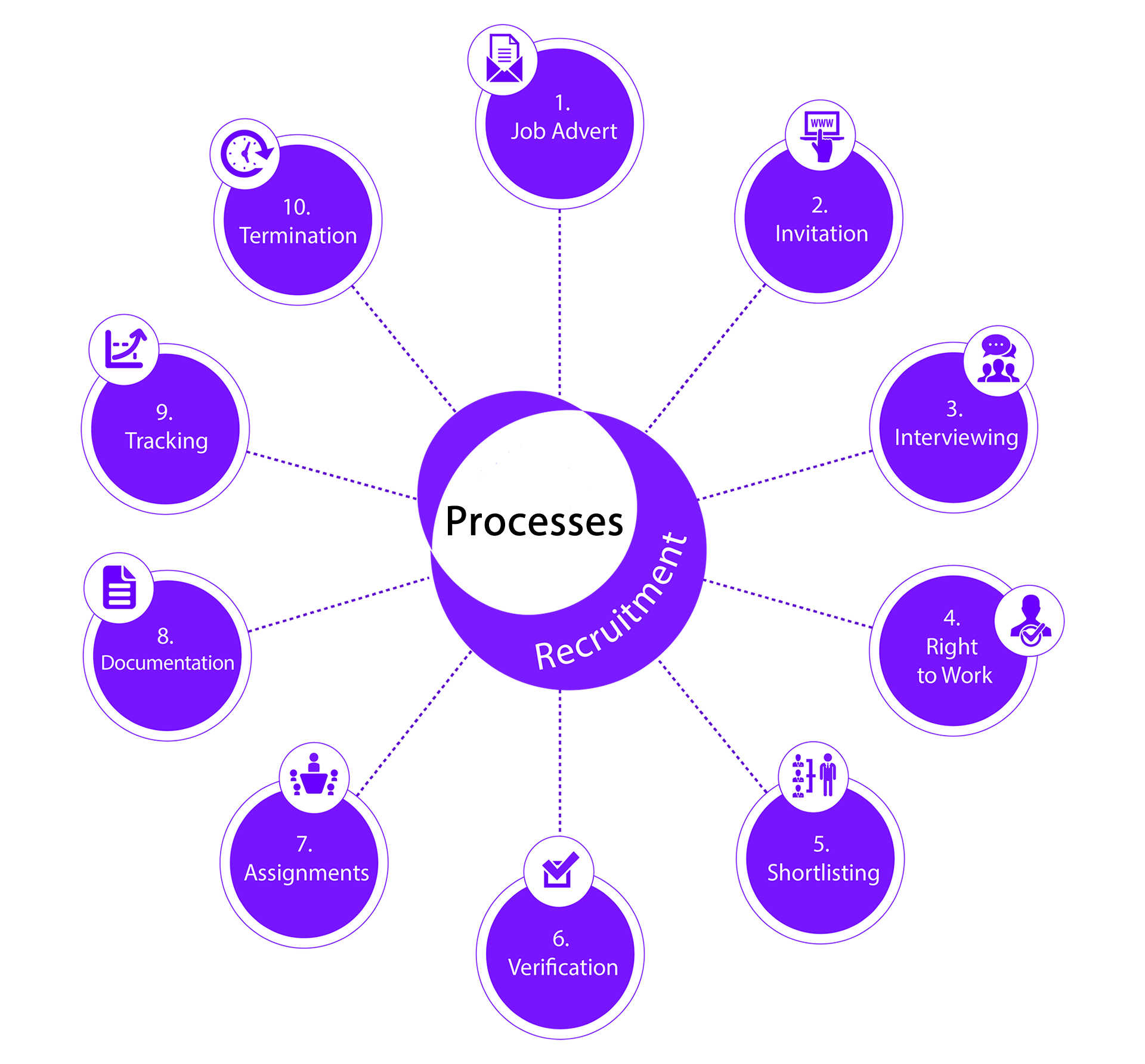
THE PROCESS
Whatever we do in life, we follow a process. A process can be simple or it can be more complex. Knowledge is the key ingredient whether we we do this manually or with technology.
Button
SIMPLICITY
Our aim is to help any organisation keep things 'Simple'. Managing a process from initial hiring to employment termination can be time-consuming.
Button
TIME = MONEY
Following our proposed 10-step process we guarantee to reduce you time and save you money as hiring people can be a very costly process.
Button
THE TEAM
A hiring process can drain the organisation resources and if not down correctly, the organisation can waist time interviewing non-compliant applicants.
Button
Slide title
In the 10-step process, we will help you comply to the relevant compliances required by the likes of HMRC, Home Offcie and any other UK regulator
Button
Support & Services
Our law firm has been providing immigration services since 2006. We specialise in visa entry to the UK until British passport, business compliance services and cloud technology.

Work Visas
Covers Skilled worker | Health and care workers | Senior or Specialist Worker visa (Global Business | obility) | Scale-up Worker visa | Minister of Religion visa (T2) | International Sportsperson visa | Charity Worker visa to name a few under this visa category.
Explore more >>
Student visas
Covers Innovator visa | Start-up visa | Apply for the Global Talent visa | Entrepreneur visa (Tier 1) | Investor visa (Tier 1).
Explore more >>
Student visas
Covers Student visa | Child Student visa | Study English in the UK (Short-term study visa)
Explore more >>
Family visas
Covers Partner or Spouse | Parents | Children | Adult to be cared for.
Explore more >>
Visit visas
Covers Visit the UK as a Standard Visitor | Visit the UK for a Permitted Paid Engagement | Visa to pass through the UK in transit | Marriage Visitor visa | Get an electronic visa waiver to enter the UK | Visit the UK in a Chinese tour group
Explore more >>
Other visa routes
Covers Right of Abode | Settlement | Naturalisation | British passport | Administrative Review | Reconsideration Request
Explore more >>
Support & Services
Our law firm has been providing immigration services since 2006 and we specialise in visa entry to obtaining British passport, business compliance and cloud technology.
-
Work Visas
Covers Skilled worker | Health and care workers | Senior or Specialist Worker visa (Global Business | obility) | Scale-up Worker visa | Minister of Religion visa (T2) | International Sportsperson visa | Charity Worker visa to name a few under this visa category.
Explore more >> -
Student visas
Covers Innovator visa | Start-up visa | Apply for the Global Talent visa | Entrepreneur visa (Tier 1) | Investor visa (Tier 1).
Explore more >> -
Student visas
Covers Student visa | Child Student visa | Study English in the UK (Short-term study visa)
Explore more >> -
Family visas
Covers Partner or Spouse | Parents | Children | Adult to be cared for.
Explore more >> -
Visit visas
Covers Visit the UK as a Standard Visitor | Visit the UK for a Permitted Paid Engagement | Visa to pass through the UK in transit | Marriage Visitor visa | Get an electronic visa waiver to enter the UK | Visit the UK in a Chinese tour group
Explore more >> -
Other visa routes
Covers Right of Abode | Settlement | Naturalisation | British passport | Administrative Review | Reconsideration Request
Explore more >>
Recruitment cycle
Employing staff has its own rules and regulations. We have
- Full-time and part-time contracts
- Fixed-term contracts
- Agency staff
- Freelancers, consultants and contractors
- Zero-hours contracts
- Employing family, young people and volunteers
Hiring is a phrase we prefer to use as hiring covers many areas under employment law. Recruitment can be costly, time-consuming and you must follow good HR practices.
Compliance in the workforce is a legal requirement and failing to have this in place, could cost you a civil penalty and even a custodial sentence plus, bad publicity from the Home Office name and shame list for immigration offences. LET US AVOID THIS!
We will now explain how best to run a complete recruitment process ensuring you have a guide to being compliant.
Assessment
Depending on the organisation structure, staffing levels and types and whether via an audit if the orgnisation is partially, fully or non-compliant. we can provide two options:
- Standard template which the organisation can custom to rtheir specific requirements.
- Advanced where we tailor the process (recommended for larger groups).
Once we have assessed the organisation, we can then say if option 1 or 2 is best suited. Every organisation will be different, some will employ highly trained individuals with a great understanding of compliance, and some will not. Some organisations will use technology but many platforms that process data are not used correctly to comply with Home Office regulations.
Below is a guide but if the organisation would require further clarification, select the tab 10-steo recruitment process but feel free to contact us for a free 30 minute consultation and we can guide you further.
10-Step recruitment process
Each of the 10 steps are structured in such a way, it will give you protection from illegal employment, save you money processing CV applications plus, reduce the time to validate each application received.
The 10 processes are created by our firm, we have extensive knowledge of employment regulations which form part of holding a sponsor licence.
If the organisation wishes to purchase our recruitment cycle, the document we provide will have essential links and additional information that is covered below.
If the organisation wishes to start from scratch, we can provide this service by tailoring the below 10 processes to the organisation specific needs. We might end up only have 8 processes or 12.
The 1-10 tabs below this page will help you to learn more about each process. If you would like the full PDF document that outlines more in greater detail, you can purchase this from our firm.
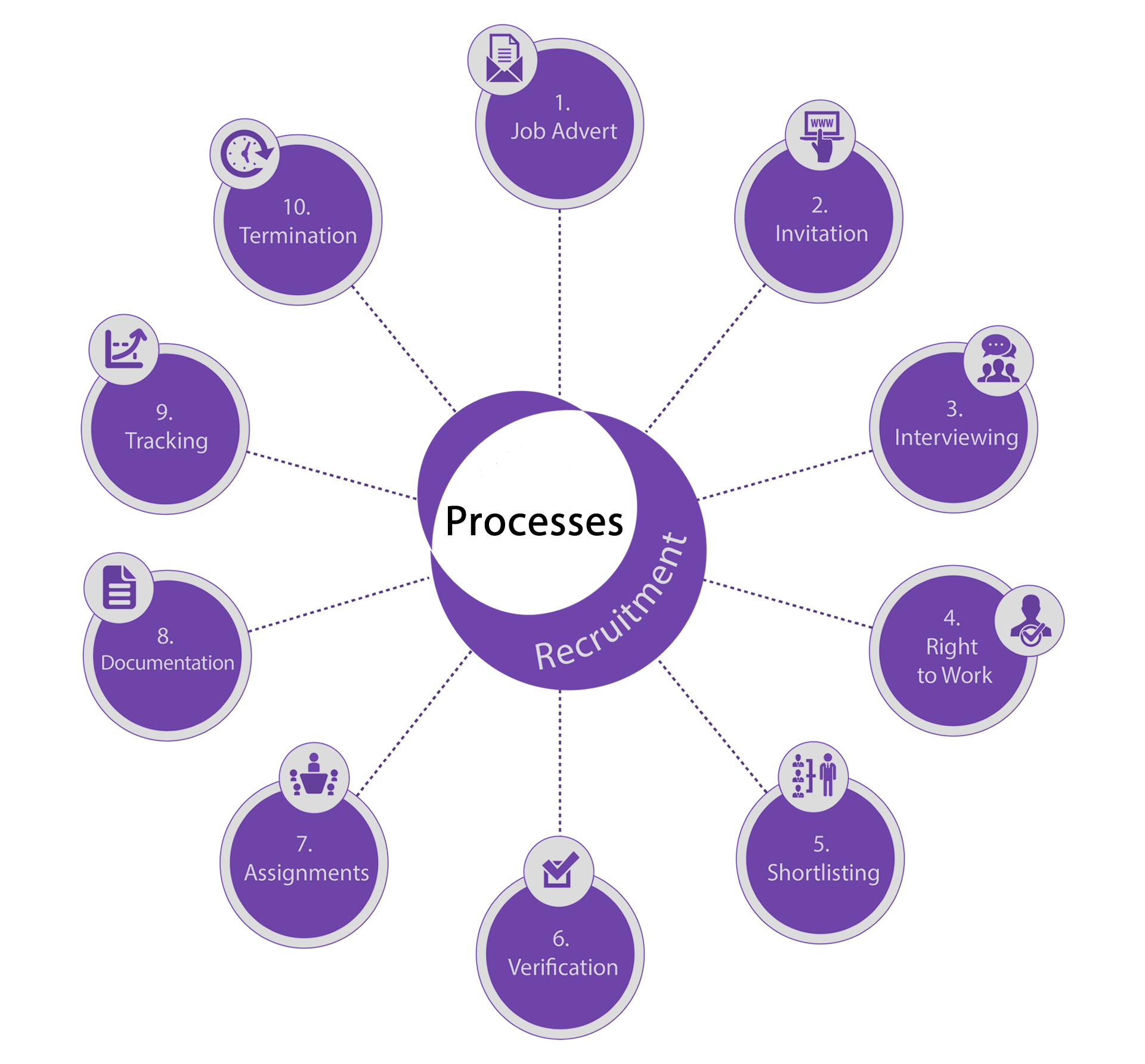
10-step overview
Click on the below tabs to view an overview of each process step.
-
1. Job advertising
When you post a job, the job advert must comply to the Equality act 2010 guidelines.
Job adverts cannot discriminate any person so be careful when using words such as:
- Age | Race | Sex | Disability | Pregnancy | Maternity | Religion or Belief
When posting a job, the organisation should reframe from using words such as:
- Recent Graduate | High Experienced* | Bar Maid | Handyman | Advertise to a specific group
* You can use highly experienced if the job vacancy was key specific such as highly skilled position. Some business advertise I need person with x years of experience, but this could be classed as discrimination so you need to be careful how you describe a person skill sets for the job role.
If employing an overseas national where a Home Office Resident Labour Market Test (RLMT) is required, this must be advertised in the Jobcentre and other places such as Internet, social media site or newspaper article unless exempt. Note: Even if a RLMT is not required, the organisation may be asked by the Home Office compliance officer, have you tried first to engage a UK settled person before hiring an overseas national.
-
2. Invitation
Whether the job vacancy needs to comply to the RLMT or not, the organisation should acknowledge any applicant that applies to the job advertisement regardless of the applicant is suitable or not.
Applicants that seem suitable for the job vacancy, should be informed of this.
When an ‘applicant' or ‘internal member of staff’ applies to the job vacancy, they should follow a certain process to avoid issues which could lead to discrimination (Equality Act 2010) and Home Office non-compliance if the job advertisement is related to a sponsored worker visa application.
Regardless of who applies to the job advert, the organisation should send the applicant a notification (email or SMS) to acknowledge their interest to the job vacancy.
-
3. Interviewing
When the organisation has decided which applicants they want to interview, some organisations will invite the applicants to their office. Doing this initial process can be very time-consuming, costly in time and from our research, many people interviewed failed to match up to their CV. Regardless which option the organisation takes to do their interviewing, the same process should follow on how they capture and log people ‘personal information’.
Interview Formats:
Online | Telephone | Webcam | Face-to-Face
Online interview is becoming more of a trend as organisations are looking at ways to reduce the hiring costs plus working from home due to the pandemic. The organisation might prefer to carry out a telephone or webcam interview. Some organisations just skip this and invite the applicant in for a face-to-face interview. The organisation must record how the interview went, discussion points, what was promised and action points.
You might be thinking why should I log this?
Did you know, if an applicant felt they were being discriminated against, they can go to ACAS and put in a discrimination complaint against your organisation; you could end up in an employment tribunal.
See Shortlisting section process for Face-to-Face interviewing.
-
4, Right to work
Before any person can be offered a job, the organisation must carry out a ‘Right to Work’ check first.
If the organisation is thinking of hiring an applicant, they must first verify if that applicant needs permission to work in the UK. If the applicant already holds a UK visa, is it:
- Valid visa and leave still remaining.
- Visa permits work with the new organisation without Home Office permission.
- If Home Office permission is permitted, can the applicant visa permit UK switching.
- If the applicant is in the UK and cannot switch whilst in the UK or change employers from their sponsored visa to another organisation, they must leave the UK to apply for an entry visa under Covid-19 concession rules apply.
Employment cannot commence until a Right to work is verified first to prevent non-compliance.
TIP
The organisation should never guarantee or promise an applicant a job until a full right to work check has been carried out. If the organisation wants to offer a job to an applicant to secure their services but have yet done a right to work check, they should provide the applicant a ‘Letter of intent’, add a clause to say, a right to work check must be first carried out and only then can we provide you a formal ‘offer of employment’. This will protect your business.
Right to work falls under various categories, they can include:
- Immigration status
- Licences
- Accreditation
- Insurance.
-
5. Shortlisting
Once the organisation has clarified the right to work status, the applicant can be shortlisted.
Once an applicant is shortlisted, interview notes should be logged, and notes added to why shortlisted.
What is deemed as being shortlisted?
Shortlisting an applicant comes in different grades, we have:
- Not suitable
- Might be suitable
- Very suitable
- then we have 2nd and possibly a 3rd interview.
When the organisation shortlists an applicant for a job role, it is no different to the initial telephone or webcam interview, the organisation must log what was discussed and promised.
When an applicant attends an interview, ask them to demonstrate their ability to do the role advertised. This could be presenting a PowerPoint to you or, presenting a business plan or, demonstrating at the interview they can do a task like create a web page (IT) or cook a dish (chef) or take a test on areas of manual handling (healthcare professional).
If the organisation is ever challenged over why they selected a person over another, this will help demonstrate how each applicant was treated equally.
-
6. Verification
When the organisation invites a applicant to a face-to-face interview, ask the applicant to bring in their original right to work evidence to the interview. Right to work evidence will depend on their job role, but certain documents must be provided such as travel ID or similar document.
Some interviews are done in one or multiple stages, this all depends on the type of role.
Tip
When the organisation takes copies of right to work evidence, they must do the following:
- Write the applicant's full name as shown in the travel ID
- Add the days date
- Add the organisation person job title
- Sign the photocopy and state you have seen the original.
Now file the evidence whether as a hard copy or electronic file.
-
7. Contract
Prior to offering the applicant an offer of employment, has the organisation done the following checks:
- Compiled a list of every applicant that applied to the job vacancy?
- Logged all CVs, covering letters and applicant other evidence?
- Added notes who shortlisted and not shortlisted?
- Added interview notes for all applicants spoken to who applied to the job?
Only offer a 'Contract of Service' (employment) if the applicant can work for your organisation.
The employment law states employees are entitled to receive several documents that outlines their employment conditions.
-
8. Documentation
It is essential any documents an organisation has on an employee is filed correctly. Documents filed should include:
- CV and if applicable CV covering letter
- References
- Qualifications
- Immigration status
- Licences if applicable
- Accreditations if applicable
- Interview notes
- Other evidence to demonstrate ability to do the job.
- Employment related documents not listed above relating to employment.
An employee has the right to know what documents/data the organisation holds on them. Data is normally stored manually or electronically. Employees’ personal data should be kept safe, secure and up to date by the organisation at all times.
Other details that should keep kept include:
- Employment history with the organisation
- Employment terms and conditions (e.g. pay, hours of work, holidays, benefits, absence)
- Any accidents connected with work
- Any training taken
- Any disciplinary action.
What the organisation should tell their employee and their rights:
- What records are kept and how they’re used
- The confidentiality of the records
- How these records can help with their training and development at work
- If an employee asks to find out what data is kept on them; the organisation will have 40 days to provide a copy of the information.
-
9. Tracking
It is essential the organisation tracks all essential data/documents held on an employee. Depending on the employee, if under immigration control, the following could be filed and where documents have expiry dates, these are tracked.
Any document required to say the worker is permitted to do that type of work must be logged and tracked if it has an expiry or renewal date.
-
10. Termination
When a member of staff leaves their employment, employees are either:
- Dismissed
- Resigned
- Made redundant
- Retired
Dismissing Staff
Dismissal is when you end an employee’s contract. When dismissing staff, you must do it fairly and log all information. If the UK organisation dismiss a Tier 2 or Tier 5 worker, they have 10 working days to login to their SMS and report it to the Home Office.
There are several types of dismissal:
- Fair dismissal
- Unfair dismissal
- Constructive dismissal
- Wrongful dismissal.
Resigned
A UK organisation cannot refuse to accept an employee resignation. They must follow certain procedures. When a member of staff resigns the UK organisation must:
- get them to confirm their resignation in writing.
- tell them what their notice period is.
- agree when their last day at work will be.
- confirm whether they should work all or part of their notice period.
- Update the UK organisation SMS within 10 working days if the worker is on a Tier 2 or Tier 5 CoS.
Important Message
Verbal resignations given in the heat of the moment could lead to claims of unfair dismissal - always ask for resignations to be given in writing.
Redundancy
Redundancy is when the UK organisation dismisses an employee because they no longer need anyone to do their job. This might be because the business is:
- changing what it does, doing things in a different way, for example using new machinery.
- changing location or closing down.
Note: For a redundancy to be genuine, the UK organisation must demonstrate that the employee’s job will no longer exist.
Redundancies can be compulsory or non-compulsory. If the UK organisation does have to make redundancies, they can get help from Jobcentre Plus.
Employee rights - Employees have certain rights and may be entitled to redundancy pay if they’re made redundant.
TIP
Regardless how the employee leaves their job, log as much information as possible. Information should be how they left their employment, hand over has been correctly done, left on good note, reasons for leaving, log performance for future references and finally, log if any holiday pay and other benefits should be paid to the employee.
Staying compliant
Can your organisation afford to have the likes HMRC, Home Office or any other regulating body auditing you and finding non-compliance?
Are you aware that the government departments share intel on your business and can collectively come and visit your business looking for non-compliance?
If you require our firm to first validate your organisation, you can request a free 30 minute consultation.
Before we accept your organisation, we will send you a questionnaire form to complete so we can ascertain how you operate your recruitment cycle.
Information provided by you is strictly confidential and will only be used for the purpose of evaluating your organisation.
Once we know your organisation's strengths and weaknesses, we will explain how we can help you.
If you require our firm to audit your organisation, we will evaluate all 10 areas of your recruitment processes and advise you of any potential issues.
Option 1 (recommended)
We recommend emailing the UK organisation a pre-qualification assessment link to complete where we ask for key information on the above 10 areas.
ALL INFORMATION PROVIDED TO OUR FIRM IS STRICTLY CONFIDENTIAL.
Upon receipt of the assessment data, our firm can then evaluate if and where any issues may lie. Issues could be improvments to organisations set up or they could be non-compliance issues that need addressing.
Option 2
If the UK organisation does not want to complete the site visit assessment form, we will charge £500.00 plus travel costs (covers up to 8 hours for travel and site visit time).
If we are unable to complete the audit in this time, the UK organisation will need to book another audit date to complete the auditing.
This is likely to cost more as the client would not be prepared before the initial audit visit taking place.
Sponsors Licence Key Links
Popular Worker Visa Routes
G4I Sponsor Licence Support
Home Office Official Documents
Sponsored Workers Guidance
Sponsor Licence Policies
Home Office Checks
Business visa routes
Other popular visas routes
-
Adult Studying

Child Studying
-
Family Visas
-
Visiting the UK

Getting Married

Civil Partnership
Commonwealth & British
-
Current British passport

New British passport

Naturalisation
Settle in the UK
-
Family Settlement

Home Sweet Home

Settling with your child

Settling under armed forces
Title Goes Here
Test goes here
Test goes here
-
Innovator visa
This visa route allows an overseas national to enter or switch if already in the UK if they possess an Innovative, Viable and Scalable business idea and can obtain endorsement from one of the UKVI-approved endorsing bodies.
The visa is issued for 3 years if you can provide evidence of £50,000 to meet the financials, English at or above B2 on the Common European Framework of Reference for Languages (CEFR), obtain an endorsement letter and meet other criteria requirements.
To find out more about this visa route click here.
-
Start-up visa
This visa route allows an overseas national to enter or switch if already in the UK if they possess an Innovative, Viable and Scalable business idea and can obtain endorsement from one of the UK higher education institutions or a business organisation with a history of supporting UK entrepreneurs.
The visa is issued for 2 years, and this visa cannot be extended but you can then switch to the Innovator visa route. Note: The Start-up visa does not count towards settlement unless you settle via the 10-year-long residence route.
You cannot join a business already operating in the UK, you must provide evidence of meeting English B2 on the Common European Framework of Reference for Languages (CEFR), obtain an endorsement letter, and meet other criteria requirements.
To find out more about this visa route click here.
-
Global Talent visa
This visa route allows an overseas national to enter or switch if already in the UK if they are a leader or potential leader in one of the following fields:
- Academia or research
- Arts and culture
- Digital technology.
You will need an endorsement from one of the 3 bodies listed above, no need to provide evidence of English but you will need to meet other eligibility criteria.
To find out more about this visa route click here.
-
Entrepreneur visa (Tier 1)
This visa route closed to new applicants on 29 March 2019 meaning, unless you held this visa type, you can only extend this visa.
If you have family members, they can join you in the UK if you still have a valid visa and also extend their visa.
If you want to apply to enter the UK as an Entrepreneur, you can now apply under the Innovator visa route.
To find out more about this visa route click here.
-
Investor visa (Tier 1)
This visa route closed to new applicants in February 2022 meaning, unless you held this visa type, you can only extend this visa.
If you have family members, they can join you in the UK if you still have a valid visa and also extend their visa.
There is no alternative visa route for investors, the only option available is the Innovator visa route.
To find out more about this visa route click here.
Sponsors Licence Key Links
Popular Worker Visa Routes
G4I Sponsor Licence Support
Home Office Official Documents
Sponsored Workers Guidance
Sponsor Licence Policies
Home Office Checks
Business visa routes
-
Profit Business

B2B contracts

Meetings

Planning
Other popular visas routes
-
Adult Studying
-
Child Studying
-
Family Visas
-
Visiting the UK
-
Getting Married
-
Civil Partnership
Commonwealth & British
-
Current British passport
-
New British passport
-
Naturalisation
Settle in the UK
-
Family Settlement
-
Home Sweet Home
-
Settling with your child
-
Settling under armed forces
Title Goes Here
Test goes here
Test goes here
-
Innovator visa
This visa route allows an overseas national to enter or switch if already in the UK if they possess an Innovative, Viable and Scalable business idea and can obtain endorsement from one of the UKVI-approved endorsing bodies.
The visa is issued for 3 years if you can provide evidence of £50,000 to meet the financials, English at or above B2 on the Common European Framework of Reference for Languages (CEFR), obtain an endorsement letter and meet other criteria requirements.
To find out more about this visa route click here.
-
Start-up visa
This visa route allows an overseas national to enter or switch if already in the UK if they possess an Innovative, Viable and Scalable business idea and can obtain endorsement from one of the UK higher education institutions or a business organisation with a history of supporting UK entrepreneurs.
The visa is issued for 2 years, and this visa cannot be extended but you can then switch to the Innovator visa route. Note: The Start-up visa does not count towards settlement unless you settle via the 10-year-long residence route.
You cannot join a business already operating in the UK, you must provide evidence of meeting English B2 on the Common European Framework of Reference for Languages (CEFR), obtain an endorsement letter, and meet other criteria requirements.
To find out more about this visa route click here.
-
Global Talent visa
This visa route allows an overseas national to enter or switch if already in the UK if they are a leader or potential leader in one of the following fields:
- Academia or research
- Arts and culture
- Digital technology.
You will need an endorsement from one of the 3 bodies listed above, no need to provide evidence of English but you will need to meet other eligibility criteria.
To find out more about this visa route click here.
-
Entrepreneur visa (Tier 1)
This visa route closed to new applicants on 29 March 2019 meaning, unless you held this visa type, you can only extend this visa.
If you have family members, they can join you in the UK if you still have a valid visa and also extend their visa.
If you want to apply to enter the UK as an Entrepreneur, you can now apply under the Innovator visa route.
To find out more about this visa route click here.
-
Investor visa (Tier 1)
This visa route closed to new applicants in February 2022 meaning, unless you held this visa type, you can only extend this visa.
If you have family members, they can join you in the UK if you still have a valid visa and also extend their visa.
There is no alternative visa route for investors, the only option available is the Innovator visa route.
To find out more about this visa route click here.
Sponsors Licence Key Links
Popular Worker Visa Routes
G4I Sponsor Licence Support
Home Office Official Documents
Sponsored Workers Guidance
Sponsor Licence Policies
Home Office Checks
Business visa routes
-
Profit Business
-
B2B contracts
-
Meetings
-
Planning
Other popular visas routes
-
Adult Studying
-
Child Studying
-
Family Visas
-
Visiting the UK
-
Getting Married
-
Civil Partnership
Commonwealth & British
-
Current British passport
-
New British passport
-
Naturalisation
Settle in the UK
-
Family Settlement
-
Home Sweet Home
-
Settling with your child
-
Settling under armed forces